When you buy through our links, we earn a small commission — and that is what funds all the free education here. It never costs you more. Products are not intended to diagnose, treat, cure, or prevent any disease.
What it is
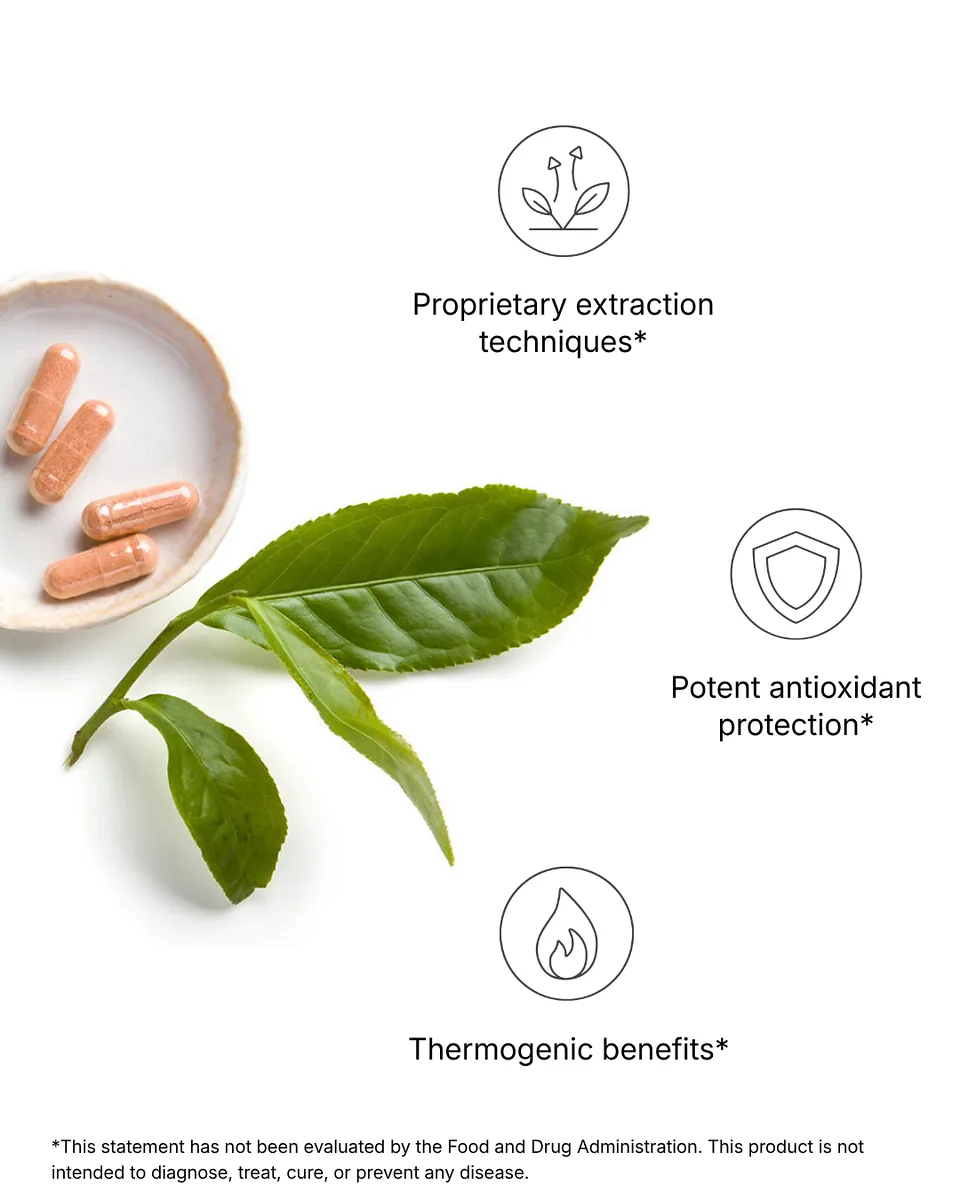
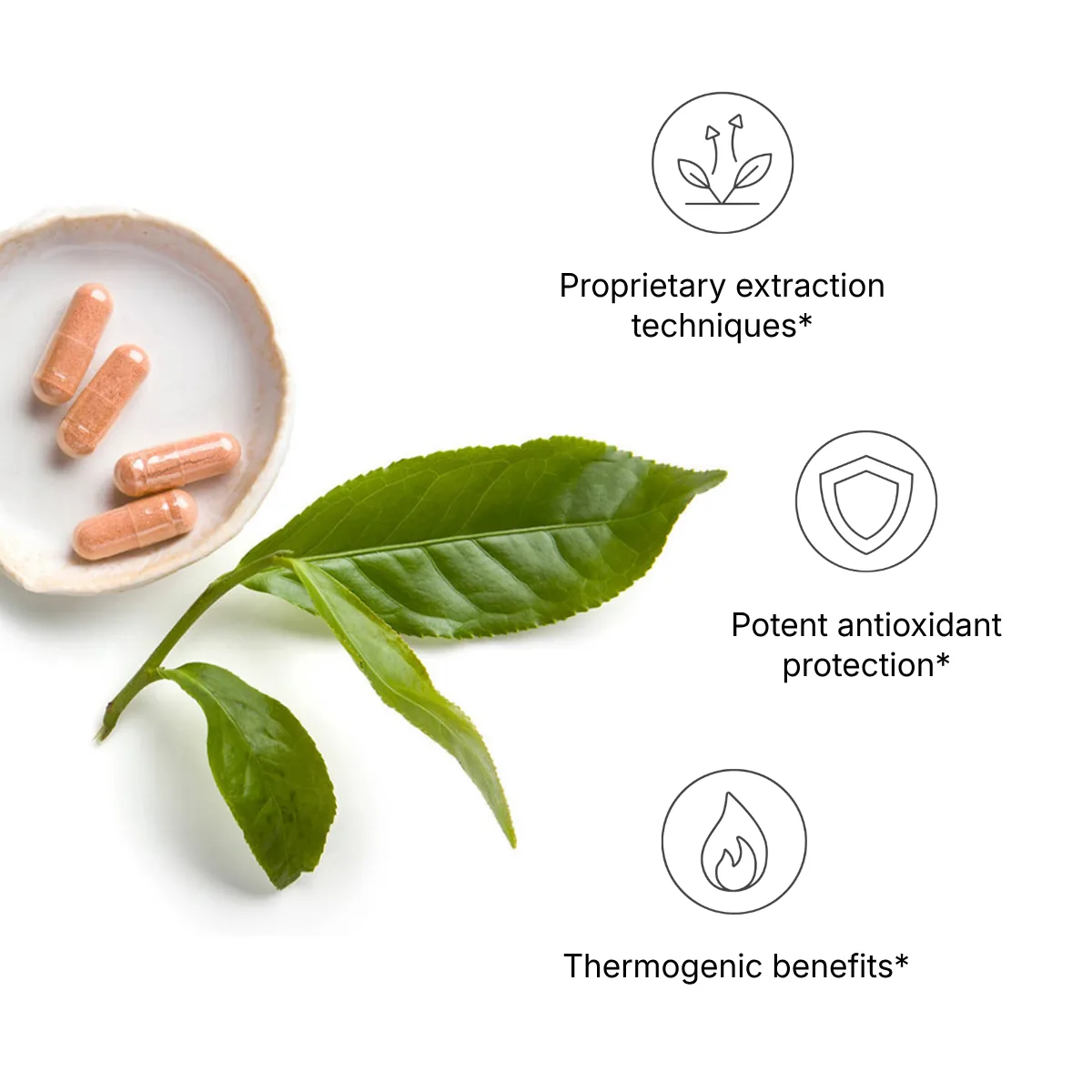
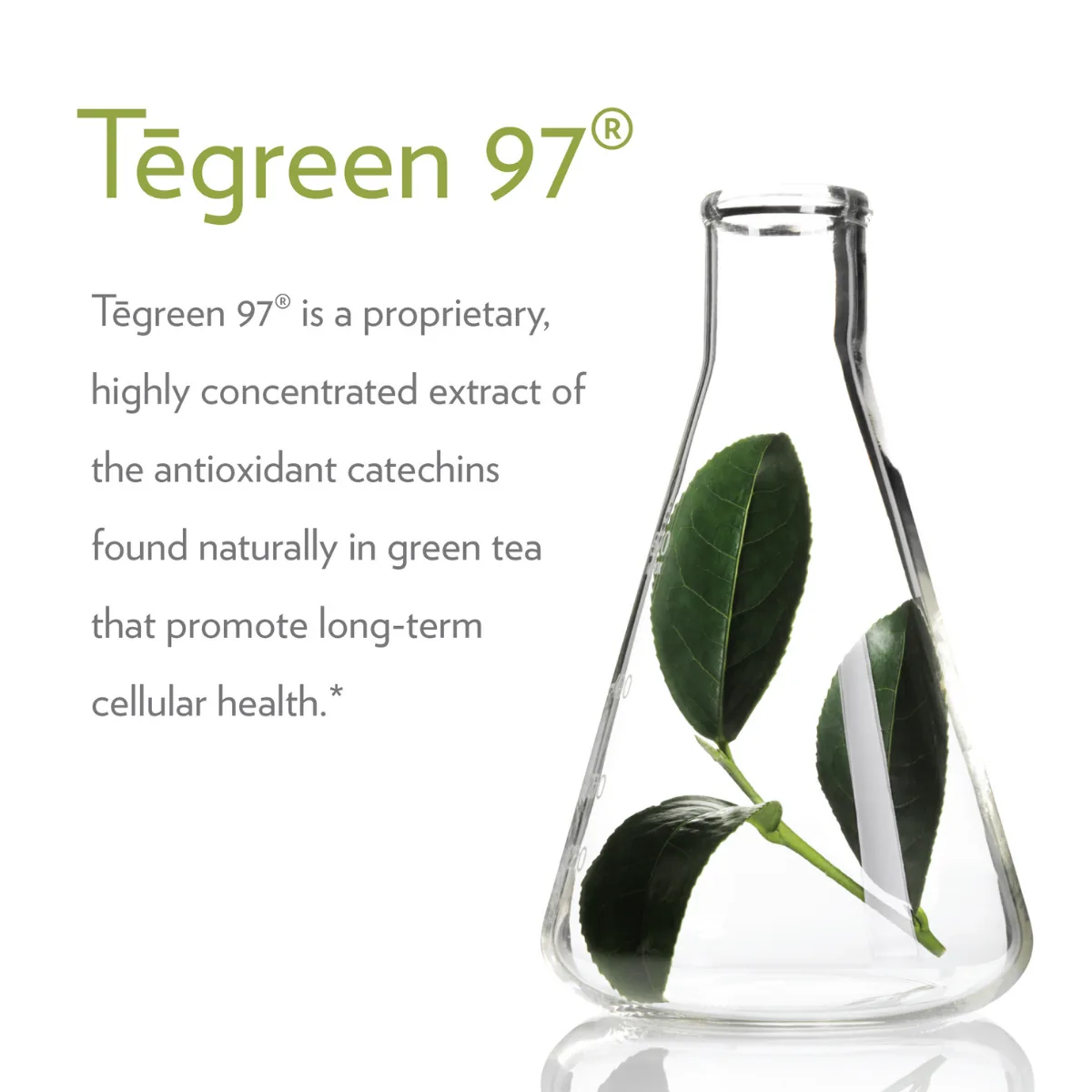
A concentrated green tea extract standardized to 97% polyphenols, about 65% of them catechins, with more than 95 mg of EGCG per capsule — roughly the antioxidant equivalent of seven cups of green tea in a 99.5% caffeine-free form. Standardization is the point: every capsule delivers a consistent catechin dose instead of the wide swing you get cup to cup.
Why the evidence supports it
Green tea catechins are among the most heavily studied plant antioxidants in nutrition science, and the mechanism is well mapped — catechins like EGCG neutralize free radicals and help shield cell structures, including DNA, from oxidative wear. A standardized extract also has bioavailability behind it: a comparative study found the concentrated catechins raised plasma antioxidant capacity more effectively than drinking green or black tea. That makes a standardized, low-caffeine extract one of the most evidence-based ways to lean on antioxidant support day to day, feeding straight into the cell's Maintain function — buffering oxidative stress so cells can hold their steady, healthy state.
What it supports
- Supports the body's normal antioxidant defenses
- Supports a healthy inflammation response already within normal range
- Provides standardized green tea catechins
- Supports healthy cellular aging as part of a balanced routine
Which function it supports
Ties to the cell's Maintain function — catechins help neutralize oxidative stress so cells can hold their steady, healthy state.
Learn the why behind this pillarHow it relates to your cells and mind
Every product here ties back to a specific job your body does. This one touches the functions below — follow either link to see the mechanism in full, then dig into the studies.
What it is made of — and the mechanisms behind it
Each ingredient acts on several of the body's functions. Taken together, this product touches these cell and mind functions — follow any to see the mechanism in full.
The ingredients
Mechanisms drawn from our ingredient knowledge base (1 profiled ingredients). Structure and function only — not a treatment claim.
The science on the ingredients
Evaluating the Effect of Epigallocatechin Gallate (EGCG) in Reducing Folate Levels in Reproductive Aged Women by MTHFR and DHFR Genotype in Combination With Letrozole or Clomiphene.EmergingRandomized controlled trial2025
A 30-day course of EGCG at 720 mg daily was well tolerated and not associated with folate deficiency in reproductive-age women, alone or with fertility medications.
Johnson JJ; Siblini H; Al-Hendy A; Segars JH; González F; Taylor HS; Singh B; Carson SA — Clinical and translational science
Assessing the Hepatic Safety of Epigallocatechin Gallate (EGCG) in Reproductive-Aged Women.EmergingRandomized controlled trial2023
A daily 800 mg dose of EGCG, alone or with fertility medications, was well tolerated and not associated with liver toxicity or folate deficiency in reproductive-age women.
Siblini H; Al-Hendy A; Segars J; González F; Taylor HS; Singh B; Flaminia A; Flores VA — Nutrients
The polyphenol epigallocatechin gallate lowers circulating catecholamine concentrations and alters lipid metabolism during graded exercise in man: a randomized cross-over study.EmergingRandomized controlled trial2023
A crossover trial found acute EGCG supplementation reduced circulating catecholamine levels during graded exercise but did not change glucose or lactate response.
Churm R; Williams LM; Dunseath G; Prior SL; Bracken RM — European journal of nutrition
Epigallocatechin Gallate in Progressive MS: A Randomized, Placebo-Controlled Trial.EmergingRandomized controlled trial2021
A phase II trial found EGCG was safe and well tolerated but did not significantly reduce brain atrophy rate in patients with progressive multiple sclerosis.
Rust R; Chien C; Scheel M; Brandt AU; Dörr J; Wuerfel J; Klumbies K; Zimmermann H — Neurology(R) neuroimmunology & neuroinflammation
Lack of pharmacokinetic interaction between fluvastatin and green tea in healthy volunteers.EmergingRandomized controlled trial2018
EGCG inhibited diclofenac hydroxylation and fluvastatin degradation in vitro, though no clinically significant pharmacokinetic interaction was found between fluvastatin and green tea in humans.
Misaka S; Abe O; Sato H; Ono T; Shikama Y; Onoue S; Yabe H; Kimura J — European journal of clinical pharmacology
Role of (-)-epigallocatechin gallate in the pharmacokinetic interaction between nadolol and green tea in healthy volunteers.EmergingRandomized controlled trial2018
EGCG is suggested to be a key contributor to a pharmacokinetic interaction between green tea and the beta-blocker nadolol in healthy volunteers.
Abe O; Ono T; Sato H; Müller F; Ogata H; Miura I; Shikama Y; Yabe H — European journal of clinical pharmacology
Bioavailability of Tea Catechins and Its ImprovementEstablishedExpert review2018
Green tea catechins including EGCG have inherently low human oral bioavailability, generally under 5 percent absorbed, due to gut metabolism, efflux transporters, and rapid liver clearance.
Cai ZY, Li XM, Liang JP, Xiang LP, Wang KR, Shi YL, Yang R, Shi M, Ye JH, Lu JL, Zheng XQ, Liang YR — Molecules
Investigating the therapeutic potential of epigallocatechin gallate (EGCG) for chronic pain management: mechanisms, applications, and future perspectives.EmergingExpert review2025
A review outlines proposed mechanisms for EGCG in chronic pain research, calling for further clinical trials to confirm efficacy and safety.
Liu Y; Chen ZJ; Fei Y; Yu X; Chen G — Fitoterapia
EGCG-based nanoparticles: synthesis, properties, and applications.EmergingExpert review2025
Non-covalent and covalent interactions of EGCG with other substances improve the stability, efficacy, and pharmacokinetic profile of EGCG-based nanoparticles.
Peng X; McClements DJ; Liu X; Liu F — Critical reviews in food science and nutrition
Epigallocatechin Gallate as a Potential Therapeutic Agent in Endometriosis: A Narrative Review.EmergingExpert review2025
A narrative review discusses EGCG as part of green herbal extract research relevant to the significant quality-of-life impact of endometriosis.
Markowska A; Kojs Z; Antoszczak M; Markowska J; Huczyński A — Nutrients
EGCG-Functionalized Selenium Nanoparticles Mitigate High-Fat Diet-Induced Hepatic Lipotoxicity Through Keap1/Nrf2 Redox Modulation and Transcriptional Regulation of AMPK/SIRT1/PGC-1α/MFN2-Associated Mitochondrial Homeostasis.EmergingAnimal study2026
EGCG-functionalized selenium nanoparticles modulated Keap1/Nrf2 redox signaling and mitochondrial homeostasis pathways in a high-fat-diet model of hepatic lipotoxicity.
Sayed FA; Maher MA; Elborlosy ME; Safwat MA; Mahmoud MS; Elmahdy FY; Tarek R; Faraag AHI — International journal of molecular sciences
ε-Polylysine/Sodium Alginate Bilayer-Modified Nanoliposomes Enhancing the Stability and In Vitro Bioavailability of Epigallocatechin Gallate.EmergingPreclinical study2026
Bilayer-modified nanoliposomes enhanced the stability and in vitro cellular uptake of EGCG without causing cytotoxicity.
Ma Z; Lv J; Zhang S; Qin Y; Li D; Gao S; Wang F; Sun B — Foods (Basel, Switzerland)
Epigallocatechin gallate-loaded alginate-peanut protein hydrogel beads: Influence of pectin-based crosslinking and chitosan-based coating strategies.EmergingPreclinical study2026
EGCG-loaded alginate-peanut protein hydrogel beads showed pH-responsive release behavior, remaining stable in gastric fluid but releasing EGCG more readily in intestinal fluid.
Wang Y; Wang X; Zhu Y; Chen Q; Guo Z; Kong B; Liu H; Li W — Carbohydrate polymers
Soybean insoluble Fiber-EGCG binary compounds: Enhanced stability and synergistic antioxidant activity.EmergingPreclinical study2025
Soybean insoluble fiber-EGCG binary compounds showed enhanced stability and synergistic antioxidant activity, supporting use as a functional bioactive carrier.
Wang Y; Zhang R; Men S; Li M; Liu G; Zeng X; Lyu B; Wang S — Food chemistry
Epigallocatechin gallate-mediated interaction modulates the gelation properties and antibacterial spectrum of rigid amyloid lysozyme fibril-chitosan hydrogels.EmergingPreclinical study2025
EGCG-mediated interaction enhanced network strength and antibacterial properties of amyloid lysozyme fibril-chitosan hydrogels, increasing gel hardness significantly.
Huang H; Wang F; Xiao X; Huang Q; Wang J; Shen Y; Gao N — Food chemistry: X
Metal-phenolic epigallocatechin gallate‑zinc antioxidant nanoparticles for cataract treatment.EmergingAnimal study2025
Metal-phenolic EGCG-zinc nanoparticles showed antioxidant activity relevant to cataract-related lens oxidative stress in a preclinical delivery study.
Wang J; Zhang R; Xie H; Yang Y; Chen H; Lin Q — Journal of controlled release : official journal of the Controlled Release Society
Epigallocatechin Gallate During Dietary Restriction - Potential Mechanisms of Enhanced Liver Injury.EmergingAnimal study2020
This study found combining EGCG with dietary restriction may increase liver injury risk, suggesting caution when using EGCG for weight loss during dieting.
Shi Z; Zhu JX; Guo YM; Niu M; Zhang L; Tu C; Huang Y; Li PY — Frontiers in pharmacology
Identification of the Catechin Uptake Transporter Responsible for Intestinal Absorption of Epigallocatechin Gallate in MiceEmergingAnimal study2019
Researchers identified a specific intestinal transporter protein responsible for absorbing EGCG from green tea, adding a concrete molecular mechanism to why this catechin's absorption is limited and variable.
Study authors per publication — Scientific Reports
Study on the pharmacokinetics of deoxyschizandrin and schizandrin in combination with epigallocatechin gallate, a component of green tea, in rats.EmergingAnimal study2018
EGCG had no significant influence on the pharmacokinetic behavior of deoxyschizandrin and schizandrin compounds in rats, consistent with in vitro transport studies.
Liu Y; Zhang D; Wang Y; Zhang W; Liu X — Xenobiotica; the fate of foreign compounds in biological systems
Epigallocatechin-3-gallate partially restored redox homeostasis in arsenite-stressed keratinocytes.EmergingCell-culture study2018
EGCG partially restored redox homeostasis in arsenite-stressed keratinocytes by modulating the Nrf2/Keap1 antioxidant signaling pathway.
Sarkar N; Sinha D — Journal of applied toxicology : JAT
EGCG as a therapeutic agent: a systematic review of recent advances and challenges in nanocarrier strategies.EmergingSystematic review2025
A systematic review on green tea catechins (EGCG) found that nanoparticles, with their unique physicochemical properties, offer a platform for the enhanced stability, bioavailability, and targeted delivery of EGCG.
Wong CN; Lim YM; Liew KB; Chew YL; Chua AL; Lee SK — Journal of Zhejiang University. Science. B
Does green tea catechin enhance exercise-induced weight lossMeta-analysis2024
Some small component signals -- Minimal additive benefit over exercise-induced weight loss (Green tea catechins evidence)
Gholami F et al. — Journal of the International Society of Sports Nutrition
The Effects of Epigallocatechin-3-Gallate Nutritional Supplementation in the Management of Multiple Sclerosis: A Systematic Review of Clinical Trials.EmergingSystematic review2024
A systematic review on green tea catechins (EGCG) found that EGCG supplementation appears to provide certain symptomatic and functional benefits in MS patients, particularly in terms of metabolic health and physical functionality.
Schuldesz AC; Tudor R; Nandarge PS; Elagez A; Cornea A; Ion R; Bratosin F; Prodan M; Simu M — Nutrients
Effect of Acute and Chronic Dietary Supplementation with Green Tea Catechins on Resting Metabolic Rate, Energy Expenditure and Respiratory Quotient: A Systematic Review.EmergingSystematic review2021
A systematic review on green tea catechins (EGCG) found that GTC may be useful for improving metabolic profiles.
Rondanelli M; Riva A; Petrangolini G; Allegrini P; Perna S; Faliva MA; Peroni G; Naso M; Nichetti M; Perdoni F; Gasparri C — Nutrients
Balanced by design — we show supporting and contradicting findings. Search all studies
No product works in isolation
Every cell function above — Sense, Exchange, Transform, Build, Maintain, Adapt — needs the same broad base of optimal micronutrient levels running underneath it, all the time. TeGreen 97 is not a stand-alone fix; it is one piece that plugs into that larger system. The foundation comes first, and this supports it.
Stacks well with
Pick your goal — here is what TeGreen 97 pairs with for each. Nothing works in isolation; these share the same systems.
For Epigenetics
For Immune
For Detox
Foundational, or targeted?
Not everything in the shop is meant to be taken forever. Some products here are foundational — a daily nutrient base built for long-term, ongoing use. Others are targeted -- shorter-term support for a specific season, not a lifelong habit. If you are not sure which one this is, that is a fair question to ask us before you buy.
Learn more, on your terms
Do not take our word for it — go read. Each topic below opens a pre-loaded search so you can explore the nutrient, the mechanism, or the device for yourself.
Search the full studies libraryHow to use it
Take with food and water, ideally not on an empty stomach and not late in the day. One capsule with a meal is a common routine. Follow the label.
Where to get it
We are lining up the best way to get this one to you. In the meantime, reach out and we will point you the right way — or browse the full shop to see every product.
See the full shopThe studies
See the research behind the science we point to.
Explore studiesThe blog
Plain-language reads on how it all fits together.
Read the blogOptimal nutrients are the definition of longevity
Long-term cell function depends on having what it needs, at the level it needs it, for as long as it needs it. That is the whole thesis behind everything we point you to here.
When you buy through our links, we earn a small commission — and that is what funds all the free education here. It never costs you more. Products are not intended to diagnose, treat, cure, or prevent any disease.
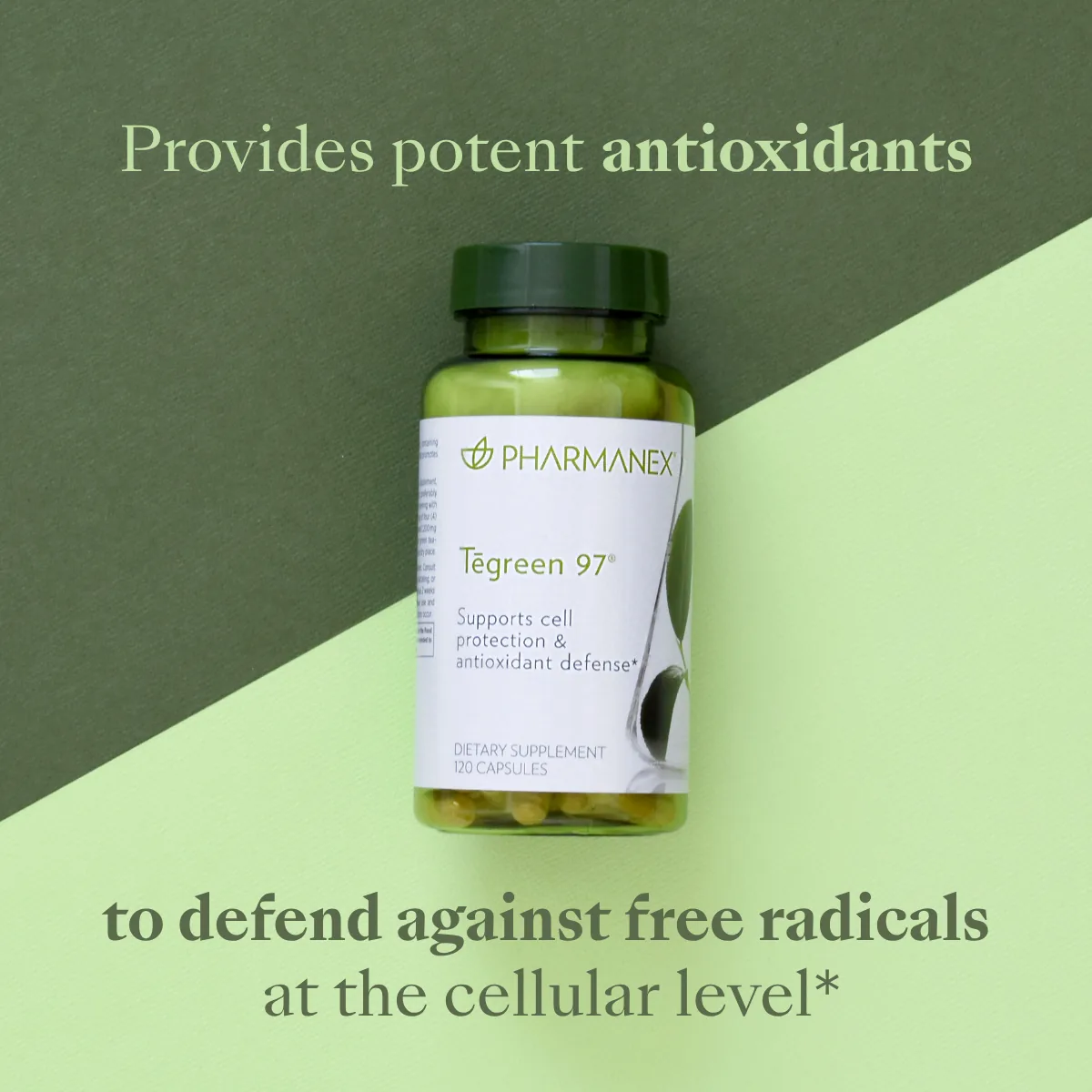
TeGreen 97 is a concentrated green tea extract standardized for catechins (including EGCG) in a low-caffeine form. It packs the useful part of many cups of green tea into a single capsule. It fits anyone who wants consistent antioxidant support without drinking cup after cup.
Common questions
What does TeGreen 97 support?+
It supports the body's normal antioxidant defenses, a healthy inflammation response already within normal range, and healthy cellular aging as part of a balanced routine, while providing standardized green tea catechins.
How do I take it?+
Take with food and water, ideally not on an empty stomach and not late in the day. One capsule with a meal is a common routine. Follow the label.
What makes it different?+
Green tea is one of the most-studied everyday plants there is, and a reputable, low-caffeine standardized extract gives you a consistent catechin dose in one capsule.