When you buy through our links, we earn a small commission — and that is what funds all the free education here. It never costs you more. Products are not intended to diagnose, treat, cure, or prevent any disease.
What it is
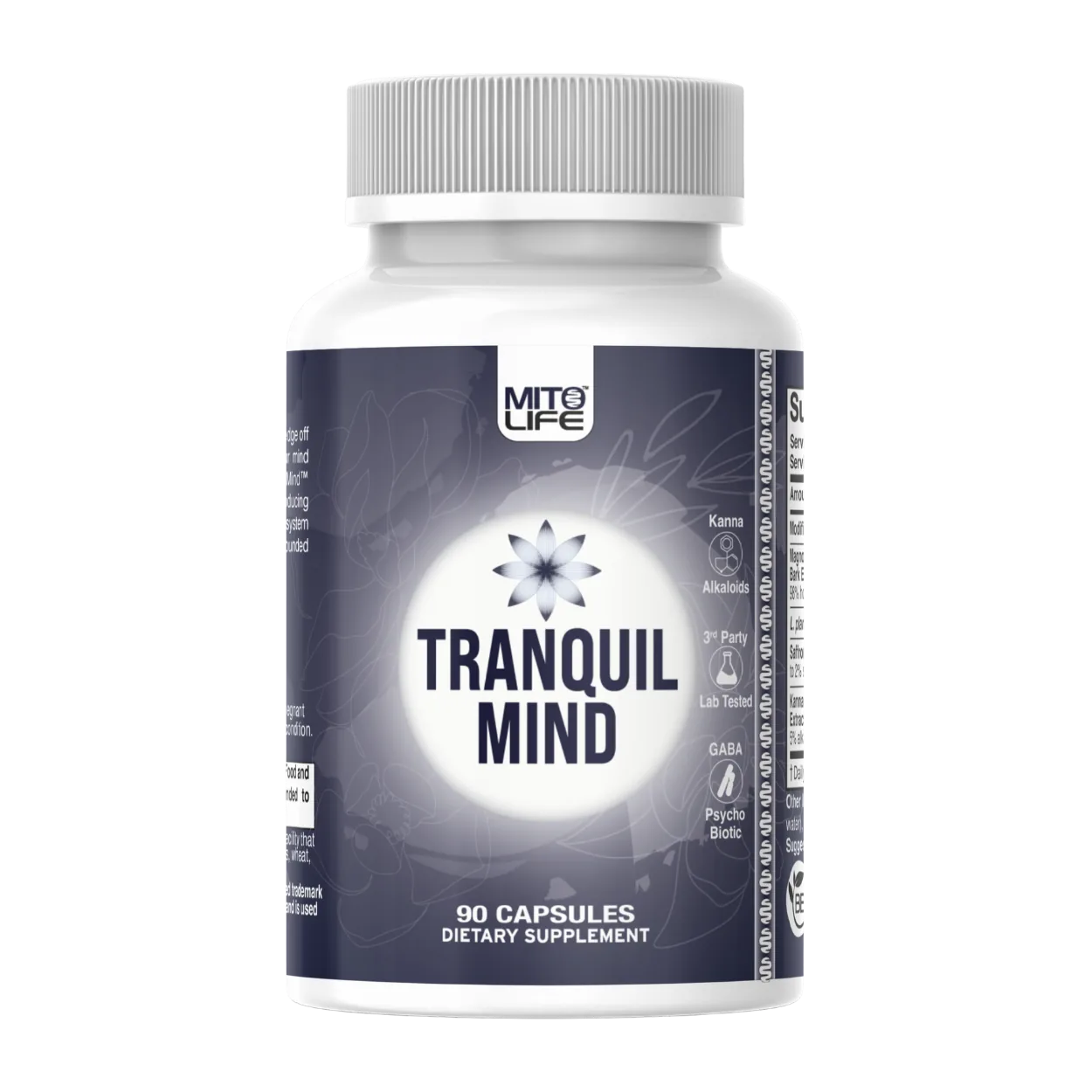
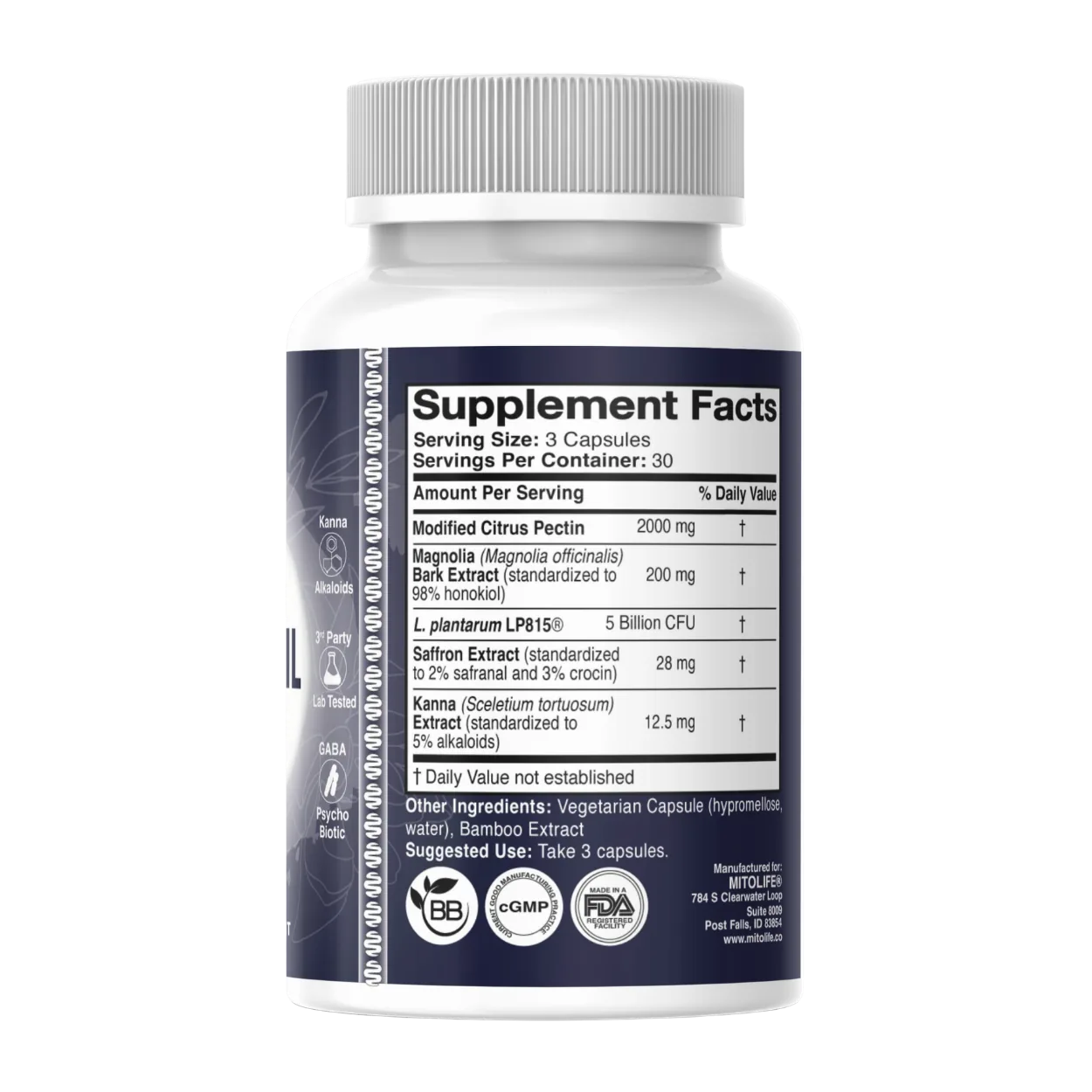
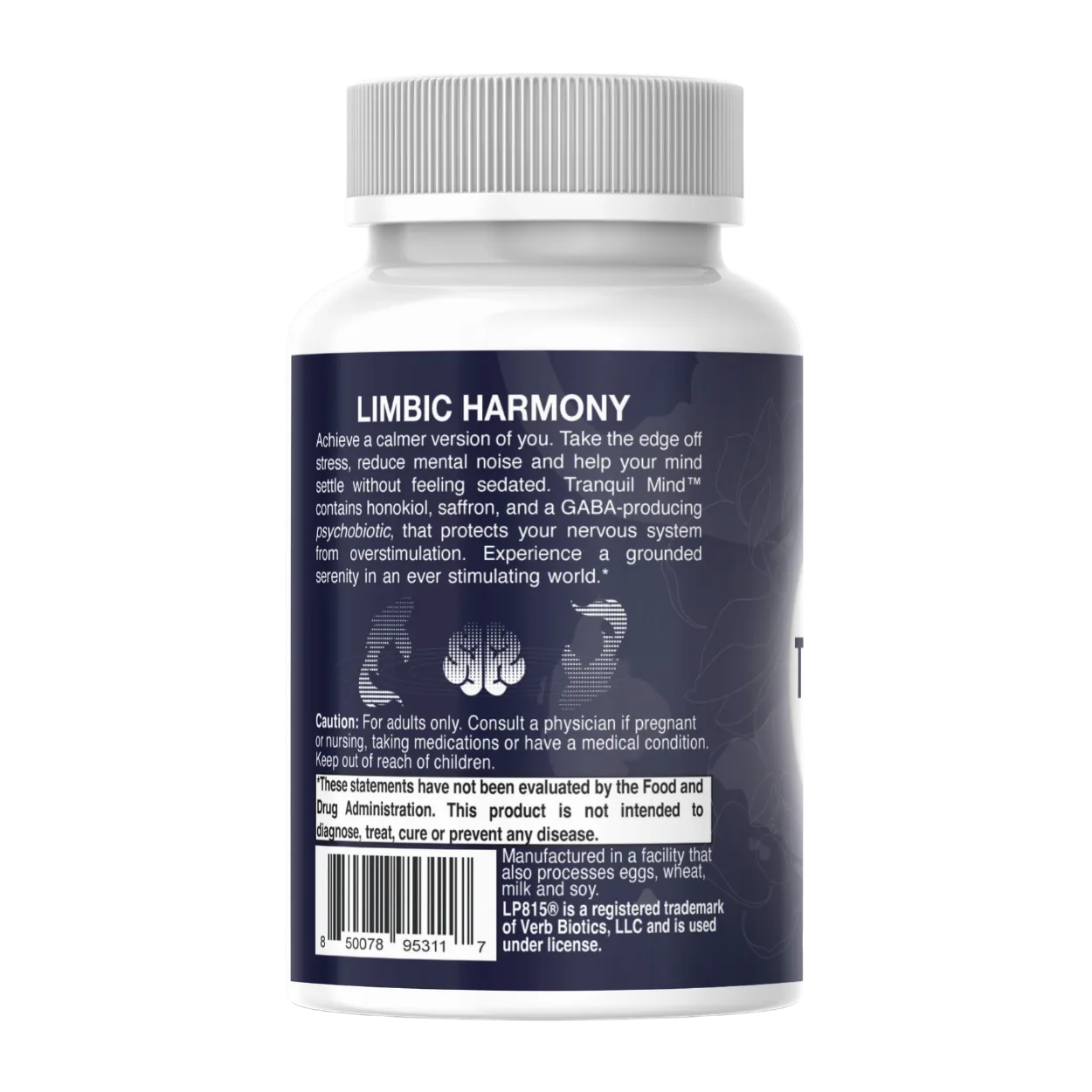
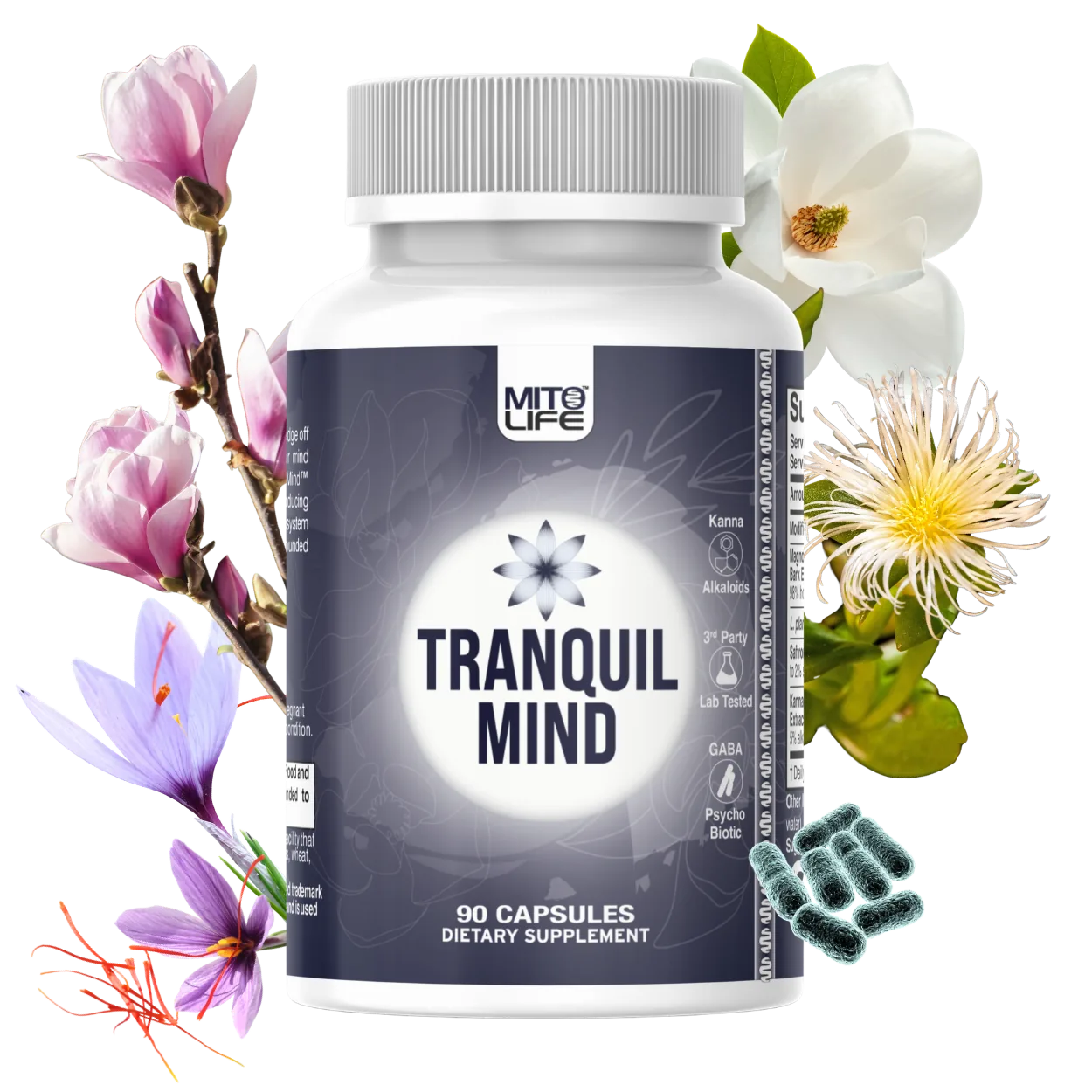
A calm-support blend of saffron (Crocus sativus), honokiol from magnolia bark, and a GABA-producing probiotic strain. Saffron and its carotenoids act on mood pathways, honokiol interacts with the GABA system for calm, and the probiotic reflects the newer gut-brain angle on GABA. It is built to take the edge off overstimulation while keeping you clear-headed rather than sedated.
Why the evidence supports it
Saffron is the strongest card in this blend — systematic reviews of randomized trials find it shows real promise for mood and calm, which is more than most stress formulas can claim. Honokiol adds a mechanism-plausible calming action on the GABA system, though much of its data is still pre-clinical, and the GABA-producing probiotic reflects a newer gut-brain idea held more loosely. Together they serve the Mind world's Regulate function — nudging the nervous system toward a settled state. Framed as everyday calm support, not a treatment for anxiety.
What it supports
- Supports a calm, settled nervous system
- Supports steady mood during busy, overstimulating days
- Aims for calm without heavy sedation
- Combines saffron, honokiol, and a calming probiotic strain
Which function it supports
Ties to the Mind world's Regulate function — supporting the nervous system's shift toward a calmer, more settled state.
Learn the why behind this pillarHow it relates to your cells and mind
Every product here ties back to a specific job your body does. This one touches the functions below — follow either link to see the mechanism in full, then dig into the studies.
What it is made of — and the mechanisms behind it
Each ingredient acts on several of the body's functions. Taken together, this product touches these cell and mind functions — follow any to see the mechanism in full.
The ingredients
Mechanisms drawn from our ingredient knowledge base (3 profiled ingredients). Structure and function only — not a treatment claim.
The science on the ingredients
Honokiol Targeting SIRT3: From Molecular Mechanisms to Therapeutic Opportunities.EmergingExpert review2025
Honokiol activates SIRT3, and this review examines the biological functions and signaling pathways of this activation across various disease models.
Xiang F; Zhang Z; Li Y; Xia B; Liao Y; Yang C; He Z; Lin L; Xie J — FASEB journal : official publication of the Federation of American Societies for Experimental Biology
The Neuropharmacological Effects of Magnolol and Honokiol: A Review of Signal Pathways and Molecular Mechanisms.EmergingExpert review2023
This review examines the signal pathways and molecular mechanisms underlying the neuropharmacological effects of magnolol and honokiol compounds.
Dai X; Xie L; Liu K; Liang Y; Cao Y; Lu J; Wang X; Zhang X; Li X — Current molecular pharmacology
Pharmacology, Toxicity, Bioavailability, and Formulation of Magnolol: An Update.EmergingExpert review2021
An expert review on Magnolia/honokiol found that besides, results from studies on antitumor activity are presented.
Lin Y; Li Y; Zeng Y; Tian B; Qu X; Yuan Q; Song Y — Frontiers in pharmacology
Protocol for Studying Honokiol Regulation of Transforming Growth Factor Beta 1/Smad Signaling in Ultraviolet A-induced Skin Photoaging Models.EmergingTrial registry2026
A trial registry on Magnolia/honokiol found that HNK has the potential to be a drug for ameliorating photo-aging damage by reducing MMP expression through activation of the TGF-β1/Smad pathway, thereby inhibiting UVA-induced photo-aging in HDF cells and mouse skin.
Ma G; Liu Z; Li Y; Tao Y — Journal of visualized experiments : JoVE
Magnolia officinalis (L.) Bark Extract Counteracts Oxidative Brain Injury: A Proteomic Investigation into Neuroprotective Mechanisms.2026
In rat brain cortical slices exposed to hydrogen peroxide-induced oxidative stress, Magnolia officinalis bark extract restored tissue viability, reduced ROS and malondialdehyde levels, and reduced activation of caspase-3, -8, and -9 apoptotic pathways.
Mattioli LB; Stella R; Peggion C; Cagnin S; Pifferi A; Miraldi E; Cappellucci G; Baini G; Camarda L; Budriesi R; Frosini M — International journal of molecular sciences
Disruption of cholesterol homeostasis triggers NLRP3-cGAS-STING axis-dependent hepatic fibrosis and honokiol intervention effects.2025
In liver cell and animal models, excess cholesterol triggered NLRP3 inflammasome activation, pyroptosis, and mitochondrial ROS that drove hepatic fibrosis, while honokiol from magnolia bark showed interventional efficacy in mitigating this cholesterol-driven damage.
Wang Z; Liu J; Mou Y; Zhou X; Liao W; Li Y; Liu Y; Tang J — Phytomedicine : international journal of phytotherapy and phytopharmacology
The Cardioprotective Effect of Magnolia officinalis and Its Major Bioactive Chemical Constituents.2025
Review describes magnolol and honokiol, the main bioactive compounds in Magnolia officinalis bark, as showing cardioprotective effects in animal and cell models, though no human clinical evidence exists yet for their absorption, bioavailability, or cardiovascular benefit.
Olas B — International journal of molecular sciences
Honokiol protects against heavy-ion radiation-induced oxidative damage via the thioredoxin system.2025
Study found honokiol, a compound from magnolia bark, protects against heavy-ion radiation-induced oxidative damage by targeting the thioredoxin reductase/thioredoxin system, identifying a specific molecular mechanism behind its radioprotective activity for the first time.
Chen Y; Shen R; Zhou X; Xu D; Wu Q; Zhang J; Fang J — Free radical biology & medicine
Therapeutic potential of Da Cheng Qi Decoction and its ingredients in regulating ferroptosis via the NOX2-GPX4 signaling pathway to alleviate and predict severe acute pancreatitis.2025
In a pancreatitis mouse model, Da Cheng Qi Decoction containing honokiol and seven other compounds reduced ferroptosis in pancreatic acinar cells by modulating the NOX2-GPX4 pathway, lowering ROS and inflammatory marker levels.
Chen J; Li F; Luo WS; Zhu MF; Zhao NJ; Zhang ZH; Chen YF; Feng DX; Yang SY; Sun WJ — Cellular signalling
Identification of senescence rejuvenation mechanism of Magnolia officinalis extract including honokiol as a core ingredient.2025
Magnolia officinalis extract, with honokiol as its core active ingredient, lowered reactive oxygen species by restoring mitochondrial electron transport function, reversing senescence-associated phenotypes in aging skin fibroblasts.
Lee YH; Jeong EY; Kim YH; Park JH; Yoon JH; Lee YJ; Lee SH; Nam YK; Cha SY; Park JS; Kim SY; Byun Y; Shin SS; Park JT — Aging
Polymer-Free Electrospinning of β-Cyclodextrin-Oligolactide for Magnolol and Honokiol Pharmaceutical Formulations.2025
A polymer-free electrospinning technique using beta-cyclodextrin-oligolactide derivatives was developed to improve the water solubility and bioavailability of magnolol and honokiol, compounds with antioxidant and antibacterial properties.
Blaj DA; Peptu CA; Balan-Porcarasu M; Peptu C; Tuchilus CG; Ochiuz L — Pharmaceutics
Magnolol protects C6 glioma cells against neurotoxicity of FB1 via modulating PI3K/Akt and mitochondria-associated apoptosis signaling pathways.2025
Magnolol protected C6 glial cells against fumonisin B1-induced neurotoxicity by modulating PI3K/Akt and mitochondria-associated apoptosis signaling, preserving cell viability and mitochondrial morphology under mycotoxin exposure.
Wang Y; Cheng D; He J; Liu S; Wang X; Wang M — Environmental pollution (Barking, Essex : 1987)
Identification and Validation of Magnolol Biosynthesis Genes in Magnolia officinalis.2024
Researchers identified laccase enzyme MoLAC14 as key to magnolol biosynthesis in Magnolia officinalis, and demonstrated a one-step conversion of magnolol from chavicol, a compound noted for potent antibacterial properties.
Yang Y; Li Z; Zong H; Liu S; Du Q; Wu H; Li Z; Wang X; Huang L; Lai C; Zhang M; Wang W; Chen X — Molecules (Basel, Switzerland)
Magnolia officinalis Rehder & E. Wilson ameliorates white adipogenesis by upregulating AMPK and SIRT1 in vitro and in vivo.2024
In cultured fat cells and animal models, Magnolia officinalis extract containing honokiol and magnolol reduced adipogenesis and lipogenesis genes while increasing SIRT1 and AMPK protein expression, studied for obesity treatment potential.
Park YJ; Kim HY; Gil TY; Kim HJ; Jin JS; Cha YY; An HJ — Heliyon
Inhibition of Ca2+-permeable TRPV3 and inflammatory cytokine release by honokiol and magnolol in human epidermal keratinocytes.2024
In human epidermal keratinocytes, honokiol and magnolol inhibited TRPV3 ion channel activity and cytokine release, including in gain-of-function TRPV3 mutants associated with Olmstead syndrome.
Thi HD; Kim JY; Kim HJ; Kim WK; Kim SJ; Nam JH — Biochemical and biophysical research communications
Distinct modulation of calcium-activated chloride channel TMEM16A by drug-binding sites.2024
Using magnolol and honokiol as chemical probes, researchers identified a nonpore drug-binding site on the TMEM16A calcium-activated chloride channel distinct from the pore-blocking site used by most tested inhibitors.
Roh JW; Gee HY; Wainger B; Kim WK; Lee W; Nam JH — Proceedings of the National Academy of Sciences of the United States of America
Honokiol and magnolol: A review of structure-activity relationships of their derivatives.2024
Honokiol and magnolol, bioactive neolignans from magnolia bark used in traditional Asian medicine, were reviewed for structure-activity relationships guiding development of related compounds.
Dai SY; Qin WX; Yu S; Li C; Yang YH; Pei YH — Phytochemistry
Honokiol and its analogues as anticancer compounds: Current mechanistic insights and structure-activity relationship.2023
A review describes how honokiol's small size and hydrophobic structure let it cross the blood-brain barrier and interact with cell membrane proteins, contributing to reported anticancer effects including cell cycle arrest, inhibition of epithelial-mesenchymal transition, and reduced tumor cell migration and invasion.
Prasher P; Fatima R; Sharma M; Tynybekov B; Alshahrani AM; Ateşşahin DA; Sharifi-Rad J; Calina D — Chemico-biological interactions
Supplemental magnolol improves the antioxidant capacity and intestinal health of broiler chickens.2021
In broiler chickens, dietary magnolol from Magnolia officinalis lowered oxidative stress markers and raised antioxidant enzyme activity while improving intestinal villus structure and gut barrier gene expression.
Du E; Fan Q; Zhao N; Zhang W; Wei J; Chen F; Huang S; Guo W — Animal science journal = Nihon chikusan Gakkaiho
Magnolol targets CCND1 to suppress the proliferation of cholangiocarcinoma cells by inhibiting the Akt and STAT3 pathways.EmergingAnimal study2026
An animal study on Magnolia/honokiol found that magnolol exerted its effect on arresting the cell cycle at the G0-G1 phase through suppressing CCND1, suggesting that magnolol holds potential as a novel anti-CCA agent.
Luo W; Meng Z; Li S — Toxicology and applied pharmacology
Laccase-Catalyzed Dimerization of Honokiol and Magnolol for Multitarget Metabolic Enzyme Inhibitors.ContestedPreclinical study2026
A preclinical study on Magnolia/honokiol found that the dimers exhibited more potent inhibitory activity than honokiol and magnolol, with houpulin B showing the strongest inhibition toward all tested enzymes.
Sciacca C; Cardullo N; Pulvirenti L; Varriale S; Vitiello L; Pezzella C; Muccilli V — Chembiochem : a European journal of chemical biology
Synergistic Effects of Honokiol on Camptothecin-triggered Apoptosis of Drug-resistant Glioblastoma Cells via CDK1-mediated G2/M Arrest and Intrinsic ROS-Mitochondrion-dependent Pathway.EmergingAnimal study2026
An animal study on Magnolia/honokiol found that our previous studies showed the benefits of CPT and CPT-containing nanoparticles on suppressing GBM tumorigenesis.
Yang CP; Chen JT; Liu SH; Chen E; Chen RM — Anticancer research
The Anti-Glioblastoma Effects of Magnolol Are Mediated through Paradoxical Enhancement of Antioxidant Defenses and Induction of Apoptosis.EmergingPreclinical study2026
A preclinical study on Magnolia/honokiol found that this novel mechanism highlights its potential as a research subject of interest.
Zand M; Latifi SA; Salehi M; Karami H — Cell journal
Honokiol Ameliorates Hepatic Lipid Accumulation by Deacetylating PPARG via SIRT3.EmergingPreclinical study2026
A preclinical study on Magnolia/honokiol found that this study suggests that HKL ameliorates hepatic lipid accumulation via SIRT3-mediated deacetylation of PPARG, providing an experimental basis for considering HKL as a research subject of interest against metabolic disorders.
Yang Y; Guo S; Luo W; Liu D; Kang X — Cells
Balanced by design — we show supporting and contradicting findings. Search all studies
No product works in isolation
Every cell function above — Sense, Exchange, Transform, Build, Maintain, Adapt — needs the same broad base of optimal micronutrient levels running underneath it, all the time. Tranquil Mind is not a stand-alone fix; it is one piece that plugs into that larger system. The foundation comes first, and this supports it.
Stacks well with
Pick your goal — here is what Tranquil Mind pairs with for each. Nothing works in isolation; these share the same systems.
For Brain & Sleep
For Mood & Hormones
For Women's Health
For Gut Health
Foundational, or targeted?
Not everything in the shop is meant to be taken forever. Some products here are foundational — a daily nutrient base built for long-term, ongoing use. Others are targeted -- shorter-term support for a specific season, not a lifelong habit. If you are not sure which one this is, that is a fair question to ask us before you buy.
Learn more, on your terms
Do not take our word for it — go read. Each topic below opens a pre-loaded search so you can explore the nutrient, the mechanism, or the device for yourself.
Search the full studies libraryHow to use it
Take with water, either during a demanding stretch of the day or in the evening to wind down, depending on how it sits with you. Follow the brand's serving size.
Use code HOLISTICLOVE at checkout.
Where to get it
We are lining up the best way to get this one to you. In the meantime, reach out and we will point you the right way — or browse the full shop to see every product.
See the full shopThe studies
See the research behind the science we point to.
Explore studiesThe blog
Plain-language reads on how it all fits together.
Read the blogOptimal nutrients are the definition of longevity
Long-term cell function depends on having what it needs, at the level it needs it, for as long as it needs it. That is the whole thesis behind everything we point you to here.
When you buy through our links, we earn a small commission — and that is what funds all the free education here. It never costs you more. Products are not intended to diagnose, treat, cure, or prevent any disease.
Tranquil Mind is a calm-support blend of honokiol (from magnolia bark), saffron, and a GABA-producing probiotic strain. It is built to help take the edge off overstimulation while keeping you clear-headed rather than sedated. It fits people who want to feel settled without the fog.
Common questions
What does Tranquil Mind support?+
It supports a calm, settled nervous system and steady mood during busy, overstimulating days, aims for calm without heavy sedation, and combines saffron, honokiol, and a calming probiotic strain.
How do I take it?+
Take with water, either during a demanding stretch of the day or in the evening to wind down, depending on how it sits with you. Follow the brand's serving size.
What makes it different?+
Saffron and magnolia bark both have real, if modest, human calm-and-mood research behind them. It is framed as everyday nervous-system support for feeling settled, not a treatment for anxiety.