When you buy through our links, we earn a small commission — and that is what funds all the free education here. It never costs you more. Products are not intended to diagnose, treat, cure, or prevent any disease.
What it is
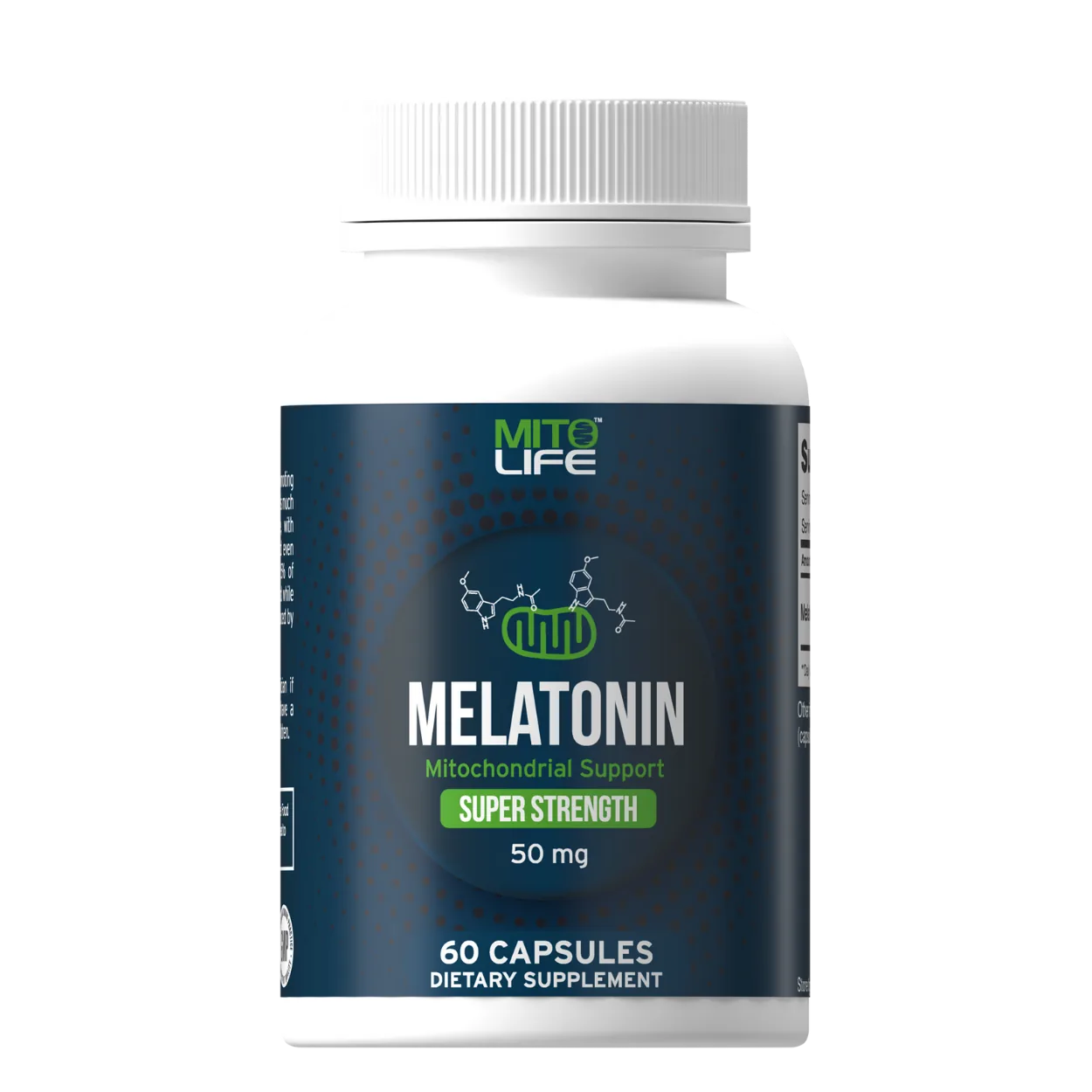
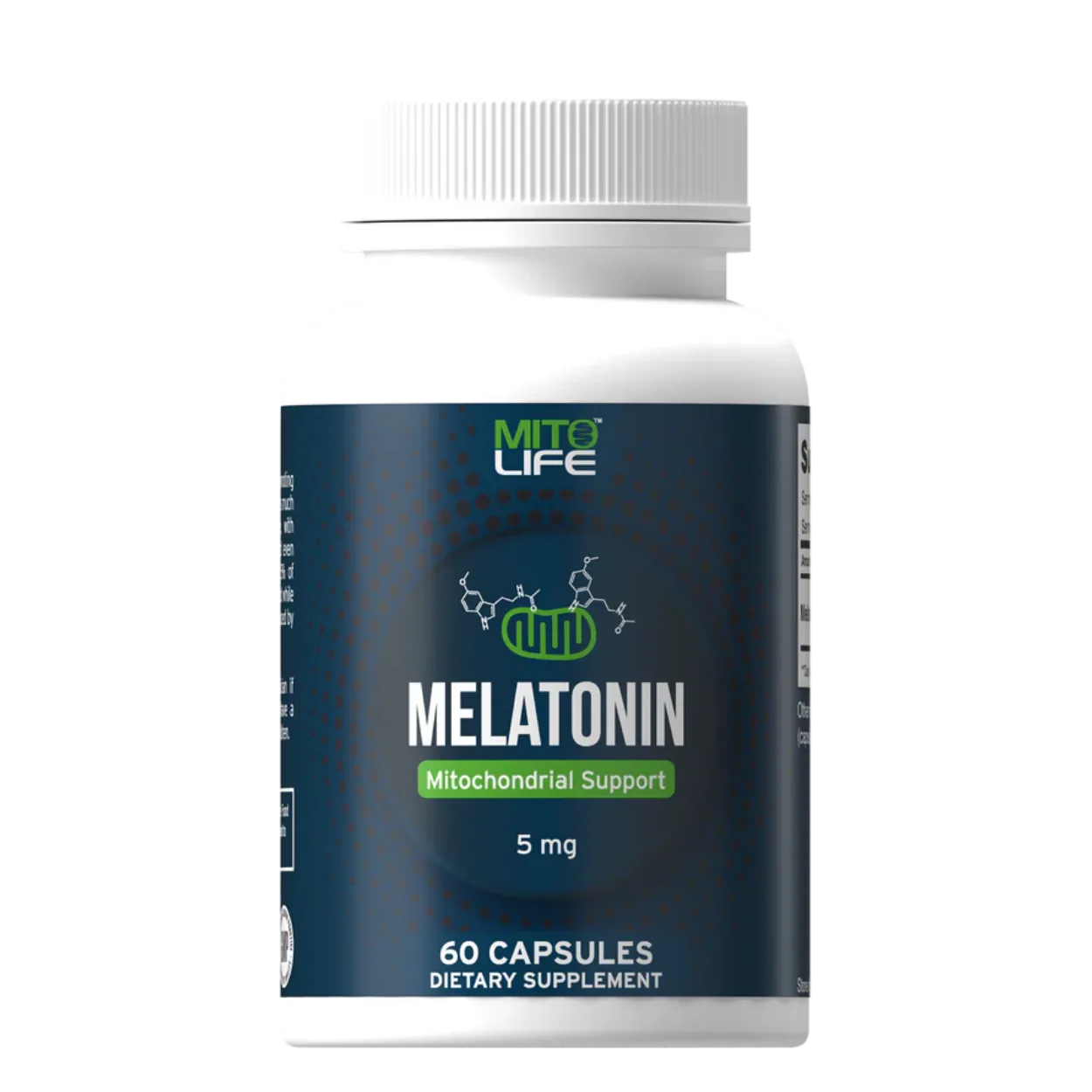
A melatonin supplement offered in a lower everyday amount and a higher amount. Most people know melatonin as the hormone the body releases as darkness falls — a timing signal that helps realign a drifted sleep-wake rhythm rather than sedating you. But that is only half of it: melatonin is also one of the body's own antioxidants, made and concentrated right inside the mitochondria, the cell's power plants. Because our own production falls steeply with age, the offering spans a low everyday dose and a higher one.
Why the evidence supports it
Melatonin is one of the most heavily studied molecules in science, and its familiar roles — shortening the time to fall asleep and shifting a clock that has drifted with travel or late-night light — are only the surface. The deeper, far-less-marketed story is that melatonin is a mitochondrial antioxidant: it is produced and concentrated inside the mitochondria themselves, it helps protect their membranes from oxidative wear, and it works as part of a team rather than alone, helping regenerate vitamins C and E back toward their active forms. Since the body's own output declines markedly with age, topping up that signal is a structure/function rationale that reaches well past sleep. Its safety record is also unusually clean: melatonin has no established lethal dose and is well tolerated across a wide range in the research, which is why both a low everyday amount and a higher one are offered. Kept honest, it supports the Mind's Regulate function — the night-time timing signal — and the cell's own antioxidant defenses in the mitochondria; it is not a sedative, and not a treatment for any condition.
What it supports
- Supports your natural circadian (sleep-wake) timing
- Acts as a mitochondrial antioxidant, supporting the cell's own defenses
- Helps regenerate vitamins C and E as part of the antioxidant network
- Tops up a signal the body produces less of with age
Which function it supports
Ties to the Mind's Regulate function and the cell's antioxidant defense — melatonin is both the body's own circadian messenger and a mitochondrial antioxidant, so it supports the timing of your sleep-wake cycle and the cell's protection from oxidative wear.
Learn the why behind this pillarHow it relates to your cells and mind
Every product here ties back to a specific job your body does. This one touches the functions below — follow either link to see the mechanism in full, then dig into the studies.
What it is made of — and the mechanisms behind it
Each ingredient acts on several of the body's functions. Taken together, this product touches these cell and mind functions — follow any to see the mechanism in full.
The ingredients
Mechanisms drawn from our ingredient knowledge base (1 profiled ingredients). Structure and function only — not a treatment claim.
The science on the ingredients
Efficacy and tolerability of pharmacological treatments for insomnia in adults: A systematic review and network meta-analysisEstablishedMeta-analysis2023
This systematic review and network meta-analysis compared twenty insomnia medications by efficacy and tolerability, using discontinuation for adverse events as a primary safety outcome across randomized trials.
Yue JL; Chang XW; Zheng JW; Shi L; Xiang YJ; Que JY; Yuan K; Deng JH; Teng T; Li YY; Sun W; Sun HQ; Vitiello MV; Tang XD; Zhou XY; Bao YP; Shi J; Lu L — Sleep medicine reviews
Melatonin's paradox: From therapeutic benefits to toxicity warningsEmergingExpert review2025
This review presents melatonin's dual profile, summarizing both its antioxidant and anti-inflammatory actions and the emerging toxicological concerns reported with exogenous use in certain populations.
Amrollahi-Sharifabadi M; Oladejo TO; Ibrahim AS; Shakoor B; Mehrpour O; Sadeghi-Hashjin G; Gonçalves S — Chemico-biological interactions
Melatonin and Vitamins: A Promising Combination to Augment Conventional Anticancer TherapiesEmergingExpert review2025
This review discusses proposed synergistic mechanisms studied when melatonin is combined with vitamins C, E, and D, involving oxidative-stress regulation, apoptosis signaling, and immune modulation in oncology models.
Talib WH; Sabri SM; Hadi RW; Prémusz V; Beregi T — Nutrients
Melatonin and AgingEmergingExpert review2023
This overview describes how melatonin production declines across the lifespan and reviews the indole's antioxidant and mitochondrial properties in the context of age-related physiological changes.
Bondy SC — Sub-cellular biochemistry
Melatonin and multiple sclerosis: antioxidant, anti-inflammatory and immunomodulator mechanism of actionEmergingExpert review2022
This review reports that melatonin raises levels of catalase, superoxide dismutase, glutathione peroxidase, and glutathione, mechanisms through which it was linked to lower oxidative stress and inflammation.
Muñoz-Jurado A; Escribano BM; Caballero-Villarraso J; Galván A; Agüera E; Santamaría A; Túnez I — Inflammopharmacology
Melatonin and healthy agingEmergingExpert review2021
This review notes that the nightly rise in plasma melatonin decreases with age and discusses how this decline is associated with disrupted circadian rhythms, sleep, and metabolic changes in older adults.
Cardinali DP — Vitamins and hormones
Is Melatonin the Cornucopia of the 21st Century?EmergingExpert review2020
This review notes that melatonin acts as a lipophilic free-radical scavenger reported to be roughly twice as active as vitamin E, and promotes expression of antioxidant enzymes through receptor signaling.
Ferlazzo N; Andolina G; Cannata A; Costanzo MG; Rizzo V; Currò M; Ientile R; Caccamo D — Antioxidants (Basel, Switzerland)
Melatonin's Antineoplastic Potential Against GlioblastomaEmergingExpert review2020
This review summarizes melatonin's studied intracellular targets and epigenetic activity in glioblastoma models, alone and combined with anticancer drugs, mapping the pathways reported in preclinical work.
Moretti E; Favero G; Rodella LF; Rezzani R — Cells
Mitochondria: Central Organelles for Melatonin's Antioxidant and Anti-Aging ActionsEmergingExpert review2018
This review reports that melatonin is found at higher concentrations in mitochondria than elsewhere in the cell and is likely synthesized there, consistent with a role in reducing mitochondrial oxidative stress during aging.
Reiter RJ; Tan DX; Rosales-Corral S; Galano A; Zhou XJ; Xu B — Molecules (Basel, Switzerland)
Melatonin transport into mitochondriaEmergingExpert review2017
This review describes how melatonin is carried into mitochondria against a concentration gradient by dedicated membrane transporters, positioning the indole where free radicals are generated to support mitochondrial antioxidant defense.
Mayo JC; Sainz RM; González-Menéndez P; Hevia D; Cernuda-Cernuda R — Cellular and molecular life sciences : CMLS
Preventive effects of melatonin on periodontal tissue destruction due to psychological stress in rats with experimentally induced periodontitis.2024
In rats with induced gum disease and psychological stress, melatonin injections lowered stress hormone levels and reduced stress-related bone loss around the teeth compared to untreated stressed rats with periodontitis.
Bostan SA; Yemenoglu H; Kose O; Akyildiz K; Mercantepe T; Saral S — Journal of periodontal research
Is Melatonin the "Next Vitamin D"?: A Review of Emerging Science, Clinical Uses, Safety, and Dietary Supplements.2022
A narrative review comparing melatonin to vitamin D describes both as sunlight or darkness responsive hormones with wide effects on immunity and inflammation, and raises safety questions about higher-dose, long-term melatonin supplement use.
Minich DM; Henning M; Darley C; Fahoum M; Schuler CB; Frame J — Nutrients
Circadian Rhythm Dysregulation and Restoration: The Role of Melatonin.2021
A literature review of 52 articles on melatonin and circadian rhythm disorders found that melatonin has been used along with bright light exposure for sleep problems, but concluded that clinical research on melatonin remains limited.
Vasey C; McBride J; Penta K — Nutrients
Melatonin in Mitochondria: Mitigating Clear and Present Dangers.2020
A review article proposes that melatonin shifts glucose processing in cancer cells from lactate production toward normal mitochondrial metabolism, based on melatonin's role in converting pyruvate to acetyl-CoA inside mitochondria.
Reiter RJ; Ma Q; Sharma R — Physiology (Bethesda, Md.)
Melatonergic agents influence sleep-wake and circadian rhythmsEstablishedMeta-analysis2022
Supports selected sleep-wake and circadian effects -- Includes receptor agonists as well as melatonin
Moon E et al. — Neuropsychopharmacology
Melatonin in glioblastoma therapy: clinical promise and mechanistic insights from bench to bedside.EmergingSystematic review2026
A systematic review found that preclinical data consistently showed that melatonin inhibited GBM proliferation, migration, invasion, stemness, and angiogenesis; disrupted mitochondrial metabolism; induced apoptosis; and modulated key pathways (EZH2 -- STAT3, HIF-1α, SIRT1, MT1/MT2, miRNAs).
Alomari O; Güney B; Juhmani RA; Alrabadi B; Mokresh ME; Odabas H; Alomari T; Reiter RJ — Neurosurgical review
Effects of melatonin supplementation on blood glycemic indices in adults: a GRADE-assessed systematic review and dose-response meta-analysis of randomized controlled trials.ContestedMeta-analysis2026
A meta-analysis on Melatonin found that the results obtained were highly heterogeneous, so the results should be interpreted with caution.
Hadi S; Hadi V; Mohammadzadeh M; Jahangirfard B — Nutrition & metabolism
The protective effects of melatonin against electromagnetic waves of cell phones in animal models: A systematic review.Systematic review2025
A systematic review of 11 animal studies found melatonin significantly protected the brain, skin, eyes, testis, and kidneys from cell phone electromagnetic wave-induced oxidative stress, tissue atrophy, and cell death.
Amiri M; Khazaie H; Mohammadi M — Animal models and experimental medicine
Optimizing timing and dose of exogenous melatonin administration in neuropsychiatric pediatric populations: a meta-analysis on sleep outcomes.EmergingMeta-analysis2025
Melatonin reached the maximal efficacy between 2 and 4 mg/day.
Bruno S; Cenerini G; Lo Giudice L; Cruz-Sanabria F; Benedetti D; Crippa A; Fiori S; Ferri R; Masi G; Faraguna U — Sleep medicine reviews
Postnatal Development of the Circadian Rhythmicity of Human Pineal Melatonin Synthesis and Secretion (Systematic Review)Systematic review2024
This systematic review traces how the melatonin rhythm develops after birth and matures into the adult evening-rise pattern controlled by the brain's central circadian clock.
Study authors — Frontiers journal
The therapeutic effect of exogenous melatonin on depressive symptomsEmergingMeta-analysis2022
BDI subgroup improved -- Overall pooled depression effect was not significant (Melatonin evidence)
Li C et al. — Frontiers in Psychiatry
Optimizing the Time and Dose of Melatonin as a Sleep-Promoting Drug: A Systematic Review of Randomized Controlled Trials and Dose-Response Meta-AnalysisMeta-analysis2024
This dose-response meta-analysis found melatonin's benefit for reducing sleep onset latency peaked around 3 to 5 mg per day, with diminishing added benefit at higher doses.
Study authors — Journal of Pineal Research
Efficacy of melatonin for chronic insomnia: Systematic reviews and meta-analyses.EmergingMeta-analysis2022
In conclusion, melatonin did not appear to be effective in adults but might be effective in children and adolescents with chronic insomnia for both comorbid insomnia and non-comorbid insomnia.
Choi K; Lee YJ; Park S; Je NK; Suh HS — Sleep medicine reviews
Melatonin and vitamin D, two sides of the same coin, better to land on its edge to improve multiple sclerosisSystematic review2023
Skin sunlight exposure drives vitamin D synthesis while light absence drives pineal melatonin synthesis; the two pathways move inversely with sun exposure.
Balanced by design — we show supporting and contradicting findings. Search all studies
No product works in isolation
Every cell function above — Sense, Exchange, Transform, Build, Maintain, Adapt — needs the same broad base of optimal micronutrient levels running underneath it, all the time. Melatonin is not a stand-alone fix; it is one piece that plugs into that larger system. The foundation comes first, and this supports it.
Stacks well with
Pick your goal — here is what Melatonin pairs with for each. Nothing works in isolation; these share the same systems.
For Brain & Sleep
Foundational, or targeted?
Not everything in the shop is meant to be taken forever. Some products here are foundational — a daily nutrient base built for long-term, ongoing use. Others are targeted -- shorter-term support for a specific season, not a lifelong habit. If you are not sure which one this is, that is a fair question to ask us before you buy.
Learn more, on your terms
Do not take our word for it — go read. Each topic below opens a pre-loaded search so you can explore the nutrient, the mechanism, or the device for yourself.
Search the full studies libraryHow to use it
Take it about 30-60 minutes before the bedtime you are aiming for, in a dark-ish room so the signal lands. Start with the lower amount and see how you respond. The higher-dose option is a personal choice worth discussing with your provider first rather than assuming more is better.
Use code HOLISTICLOVE at checkout.
Where to get it
We are lining up the best way to get this one to you. In the meantime, reach out and we will point you the right way — or browse the full shop to see every product.
See the full shopThe studies
See the research behind the science we point to.
Explore studiesThe blog
Plain-language reads on how it all fits together.
Read the blogOptimal nutrients are the definition of longevity
Long-term cell function depends on having what it needs, at the level it needs it, for as long as it needs it. That is the whole thesis behind everything we point you to here.
When you buy through our links, we earn a small commission — and that is what funds all the free education here. It never costs you more. Products are not intended to diagnose, treat, cure, or prevent any disease.
Melatonin is offered in a lower everyday amount and a higher amount. Melatonin is the signal your body already uses to mark nighttime, so a small dose can help nudge your sleep timing when your rhythm has drifted. It fits people whose sleep clock is off from travel or late screens.
Common questions
What does Melatonin support?+
It supports your natural circadian (sleep-wake) timing, an easier drift into sleep at night, and the body's own nighttime antioxidant activity, and it helps when travel or late screens have shifted your rhythm.
How do I take it?+
Take it about 30 to 60 minutes before the bedtime you are aiming for, in a dark-ish room so the signal lands. Start with the lower amount and see how you respond.
What makes it different?+
It is used the way the body actually uses it — as a timing signal, not a sedative. Starting low to find the smallest amount that helps is better than assuming more is better.